
Divorce is rarely easy. Even when both spouses agree that ending the marriage is the right decision, questions about property, finances, children, retirement accounts, and future responsibilities can quickly create tension. For many Texans, the fear of a lengthy court battle is one of the most stressful aspects of the divorce process. Fortunately, not every divorce has to be decided by a judge.
Many divorcing couples in Texas are able to reach agreements outside of the courtroom through mediation. When those agreements are properly documented, they often become part of what is known as a Mediation Settlement Agreement (MSA). This document can play a significant role in simplifying the divorce process, reducing uncertainty, and helping families move forward with greater confidence.
Whether you live in Southlake, Colleyville, Grapevine, Keller, Trophy Club, Westlake, Flower Mound, Coppell, Bedford, Euless, Hurst, North Richland Hills, Fort Worth, Arlington, Roanoke, Haslet, Irving, or elsewhere in Texas, understanding how a Mediation Settlement Agreement works can help you make informed decisions during your divorce.
Understanding Divorce in Texas
Texas divorce law involves much more than filing paperwork and appearing before a judge.
When a marriage ends, spouses often need to resolve issues involving:
- Division of marital property
- Division of debts
- Child custody arrangements
- Parenting responsibilities
- Child support
- Spousal maintenance
- Retirement benefits
- Real estate interests
- Business ownership interests
If spouses cannot reach agreements on these matters, a court may ultimately decide them after a trial. However, litigation can be expensive, time-consuming, and emotionally draining.
This is one reason why Texas courts frequently encourage parties to explore settlement options before proceeding to trial.
What Is a Mediation Settlement Agreement?

A Mediation Settlement Agreement is a written document that outlines the terms agreed upon by both parties during mediation.
Think of it as a roadmap for resolving the issues involved in a divorce.
Rather than leaving decisions to the court, the spouses work toward mutually acceptable solutions and document those resolutions in writing.
Depending on the circumstances, a Mediation Settlement Agreement may address:
- Property division
- Child custody terms
- Parenting schedules
- Child support obligations
- Medical support
- Division of retirement accounts
- Allocation of debts
- Sale or transfer of real estate
- Tax-related responsibilities
- Future dispute-resolution procedures
Once properly executed, the agreement can become the foundation for the final divorce decree.
Why Many Texas Divorces End in Settlement
Contrary to popular belief, most divorces do not end with dramatic courtroom trials.
Many cases are resolved through negotiated agreements because they provide benefits that litigation often cannot.
For example, divorcing spouses usually know their financial circumstances, schedules, and family dynamics far better than any judge ever could.
Settlement allows families to create solutions tailored to their specific circumstances rather than relying on a court-imposed outcome.
This flexibility often leads to more practical and sustainable arrangements.
How an MSA Can Reduce Stress During Divorce
One of the most significant benefits of a Mediation Settlement Agreement is the reduction of uncertainty.
Uncertainty is often what creates the greatest anxiety during divorce.
People commonly worry about:
- Losing important assets
- Future financial stability
- Parenting arrangements
- Housing concerns
- Retirement savings
- Court decisions beyond their control
When an agreement is reached through mediation, many of these concerns become more predictable.
Instead of waiting months to learn how a judge might rule, spouses gain clarity about their future obligations and rights.
This can provide tremendous peace of mind during a difficult transition.
Providing Greater Control Over Important Decisions

One of the realities of litigation is that neither party controls the final outcome.
Judges are tasked with making decisions based on evidence, testimony, and applicable law. While judges strive to reach fair decisions, they are limited by the information presented in court and the time available to review each case.
A Mediation Settlement Agreement allows spouses to actively participate in shaping the terms of their divorce.
This often results in solutions that are more practical and customized than those available through litigation.
For example, spouses may create:
- Unique property division arrangements
- Customized parenting schedules
- Flexible holiday provisions
- Creative financial solutions
- Tailored support agreements
These options may not always be available through a standard court ruling.
Addressing Property Division More Efficiently
Property division is often one of the most contested aspects of divorce.
Texas is a community property state, which means certain property acquired during the marriage may be subject to division.
However, determining how assets should be divided is rarely straightforward.
Questions often arise regarding:
Family Homes
Who will remain in the home?
Will the property be sold?
How will equity be divided?
Retirement Accounts
How should retirement savings accumulated during the marriage be allocated?
Businesses
If one or both spouses own a business, how should its value be addressed?
Debts
Who will be responsible for mortgages, loans, credit cards, and other obligations?
A well-crafted Mediation Settlement Agreement can address these issues clearly and comprehensively, reducing the likelihood of future disputes.
Helping Parents Create Practical Parenting Solutions
For parents, divorce involves much more than financial concerns.
Parents must determine how they will continue raising their children while living separately.
Every family has unique needs.
Children may have:
- School commitments
- Athletic activities
- Medical needs
- Special educational requirements
- Religious obligations
- Social commitments
A Mediation Settlement Agreement can establish detailed provisions that address these realities.
Rather than relying on generic arrangements, parents can develop plans that reflect the specific needs of their children and family schedules.
Reducing the Financial Cost of Divorce
One concern shared by many divorcing spouses is cost.
Litigation expenses can accumulate quickly when disputes continue for months or years.
Expenses may include:
- Attorney fees
- Expert witnesses
- Financial evaluations
- Court appearances
- Discovery costs
- Trial preparation expenses
While mediation is not free, resolving issues through a settlement agreement often reduces the overall financial burden associated with prolonged litigation.
The resources saved can often be redirected toward rebuilding financial stability after divorce.
Encouraging Future Cooperation
The way a divorce is resolved can influence future interactions between former spouses.
This is especially important when children are involved.
Even after the divorce is finalized, parents often continue sharing responsibilities related to:
- School events
- Medical decisions
- Extracurricular activities
- Graduations
- Family milestones
When parties participate in creating a settlement agreement, they frequently establish a stronger foundation for future communication.
Although disagreements may still occur, the process often encourages a more solution-oriented mindset moving forward.
The Importance of Clear and Detailed Agreements
One of the biggest mistakes parties can make is assuming that general language will solve future problems.
Ambiguous provisions often create confusion later.
A properly drafted Mediation Settlement Agreement should clearly define:
- Responsibilities
- Deadlines
- Payment obligations
- Property transfers
- Custody terms
- Future procedures
The more detailed and precise the agreement, the less likely disputes will arise after the divorce is finalized.
This is one reason why legal guidance is so important throughout the process.
How Attorneys Help Protect Your Interests
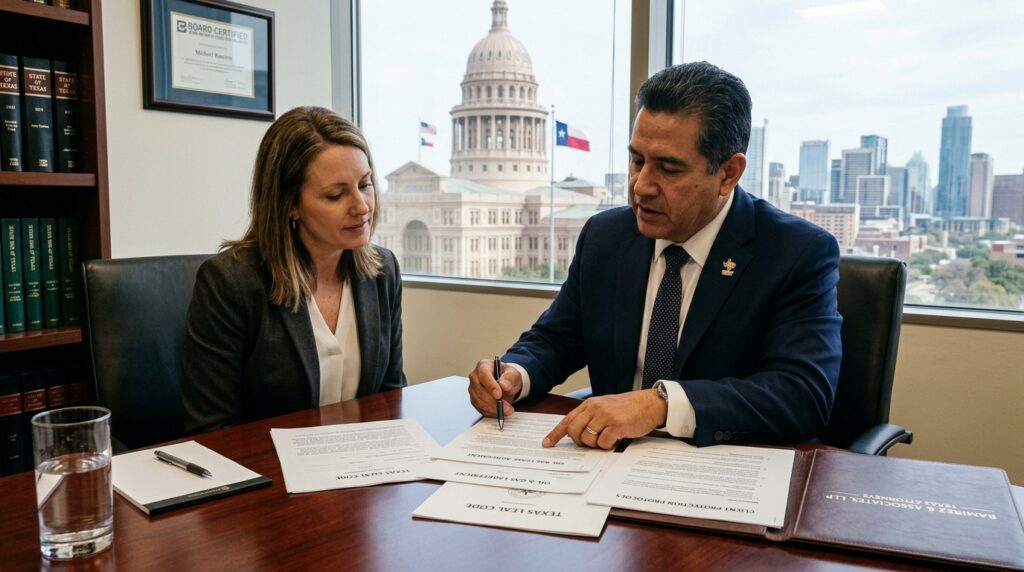
Some people mistakenly believe that mediation eliminates the need for legal representation.
In reality, experienced family law attorneys often play a critical role in helping clients navigate mediation successfully.
An attorney can:
Evaluate Proposed Terms
Not every settlement proposal serves your long-term interests.
Your lawyer can help identify strengths, weaknesses, and potential risks.
Explain Texas Law
Understanding your legal rights is essential before agreeing to any settlement.
Identify Overlooked Issues
Certain financial, property, or parenting concerns may not be immediately obvious.
An experienced attorney can help ensure important matters are properly addressed.
Review Documentation
Even small drafting errors can create significant problems later.
Legal review helps ensure the agreement accurately reflects the parties’ intentions.
Prepare for Finalization
Once an agreement is reached, additional legal steps are often required before the divorce becomes final.
An attorney helps guide clients through these requirements.
Common Misconceptions About Mediation Settlement Agreements
Several misconceptions often prevent people from fully understanding the value of an MSA.
“Only Amicable Couples Use Mediation”
Not true.
Many couples who strongly disagree on important issues are still able to reach productive agreements through mediation.
“Settlement Means Giving Up”
Settlement does not mean surrendering important rights.
It means evaluating options carefully and making informed decisions about the future.
“The Agreement Is Just a Formality”
An MSA is a significant legal document that can impact finances, parenting responsibilities, and property rights for years to come.
It should be approached thoughtfully and reviewed carefully.
Looking Beyond the Divorce
A successful divorce resolution is not simply about ending a marriage.
It is also about creating a framework for the future.
A well-structured Mediation Settlement Agreement can provide:
- Financial clarity
- Predictability
- Stability for children
- Reduced future conflict
- Greater confidence moving forward
By addressing important issues comprehensively, the agreement helps families focus less on litigation and more on rebuilding their lives.
How the Law Offices of Kate Smith PLLC Can Help
If you are considering divorce or currently navigating a divorce case in Texas, experienced legal guidance can make a meaningful difference.
The Law Office of Kate Smith PLLC assists individuals and families throughout Southlake, Colleyville, Grapevine, Keller, Trophy Club, Westlake, Flower Mound, Coppell, Bedford, Euless, Hurst, North Richland Hills, Roanoke, Arlington, Fort Worth, Irving, and surrounding communities.
The firm understands that every divorce involves unique circumstances, financial concerns, and family dynamics. Whether your case involves significant assets, complex property division, parenting matters, or settlement negotiations, the team works diligently to help clients pursue practical and effective solutions.
From evaluating settlement options to reviewing Mediation Settlement Agreements and protecting your legal interests throughout the divorce process, the Law Office of Kate Smith PLLC provides the guidance and advocacy many Texans need during life’s most challenging transitions.
Final Thoughts
Divorce may mark the end of a marriage, but it also creates the foundation for the next chapter of your life. The decisions made during the divorce process can have lasting effects on your finances, your children, and your future opportunities.
A carefully negotiated Mediation Settlement Agreement can simplify the process by providing clarity, reducing conflict, and helping spouses resolve important issues without the uncertainty of a courtroom trial.
If you are facing divorce anywhere in Texas and want experienced guidance regarding mediation, settlement negotiations, or family law matters, contact the Law Office of Kate Smith PLLC to learn how skilled legal representation can help you move forward with confidence and peace of mind.